Berber Carpet Cost in 2026: $3 to $12 Per Sq Ft Installed
Berber loop carpet installed runs $3 to $12 per sq ft, spanning budget polypropylene through premium wool Berber. The loop construction is the longest-lasting carpet style in high-traffic areas like hallways and stairs, and is the most forgiving for hiding traffic patterns. The trade-offs are firmer pad requirements and snag vulnerability that makes it a poor choice in homes with cats or untrained dogs.
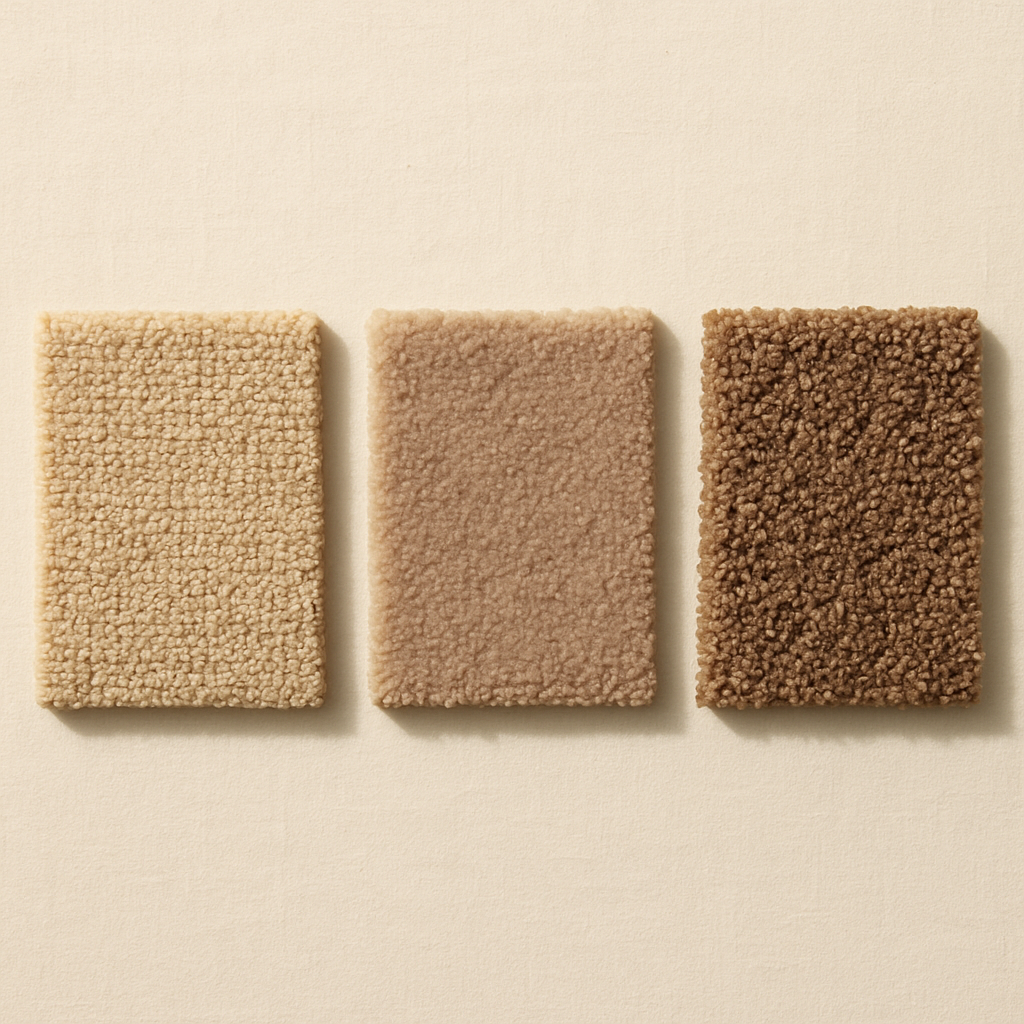
Berber is a construction, not a fibre
The word Berber gets used loosely in the consumer carpet market, often as a stand-in for "flecked loop carpet that looks rustic". The technical definition is narrower. Berber is a loop-pile construction, meaning the carpet yarn loops up from the backing, across the carpet surface, and back down into the backing without being cut. Cut-pile carpet (plush, frieze, Saxony) cuts those loops at the surface so each fibre stands as an individual upright tuft. The loop vs cut distinction is the foundational construction choice; the fibre (polypropylene, nylon, wool) is a separate question.
The loop construction produces a flatter, denser surface than cut-pile. Traffic patterns (the lines worn into carpet by daily walking routes) are far less visible on Berber than on cut-pile because the loops do not crush down differently along the walk path. Footprints do not show. Vacuum lines do not show. The result is a carpet that looks newer for longer, which is the main reason Berber dominates hallway, stair, and high-traffic basement installs. The trade-offs are firmer pad requirements (loops need support), reduced underfoot softness compared to plush cut-pile (loops do not compress the same way), and the snag vulnerability that is the single biggest Berber failure mode.
The pad-density requirement (warranty-critical)
Berber is the only common carpet style where pad density and thickness are warranty-binding spec requirements rather than recommendations. Standard 8 lb rebond pad is the industry default for cut-pile carpet and is too soft for most Berber installs. The Berber-specific spec, called for by Mohawk, Shaw, Stainmaster, and Karastan in their loop-pile warranty documents, is a 6 lb minimum density padat a maximum of 7/16 inch thickness. Some warranties specify higher density (8 lb) for commercial-grade loop installs. Pad thicker than 1/2 inch or softer than 6 lb can void the carpet warranty entirely.
The reason: loop carpet relies on consistent backing support to keep the loops in their woven pattern under foot compression. A too-soft pad allows loops to compress unevenly, which over 12 to 24 months produces a visible wave-like surface pattern as adjacent loops separate from each other at the backing. The damage is permanent. Always ask the installer specifically what pad density and thickness will be used with the Berber, and get it on the written quote. Reputable installers will know the spec without being asked; an installer who shrugs at the question is the wrong installer for a Berber job.
Snagging and pet-claw vulnerability
The loop construction has a failure mode that cut-pile does not share. If any single loop is snagged and pulled (by a cat claw, dog claw, child's toy, vacuum-cleaner brush grab, dragged furniture leg), the entire row of loops connected to that snag can unravel in a straight line across the carpet, six to twelve inches at a time. The damage is highly visible because the unravelled row exposes the carpet backing in a straight line. The only repair is to patch from leftover broadloom, which produces a visible patched section that does not perfectly match the surrounding pile direction. In practice this means Berber is a poor choice for households with cats (the most damaging culprit), untrained dogs, very young children, or any large pieces of furniture that get dragged rather than lifted. For those households, cut-pile (where the loops are cut at the surface, so a snag stops at the next strand) is materially more forgiving.
Where Berber is the right call
Three room types are reliably Berber territory. Hallways: high traffic, narrow geometry, and the flat-loop surface hides walk patterns better than any cut-pile alternative. Stairs: same traffic case plus the firmer underfoot feel is a safety positive on stairs (a high cut-pile can roll underfoot in stocking feet, a level-loop Berber does not). Finished basements: the flat dense surface handles high-traffic family room use, and polypropylene Berber is the standard basement spec because it handles moisture better than wool Berber. Outside those three, Berber competes with cut-pile as a style choice rather than a clear winner, and the snag risk weighs against it in family rooms and bedrooms.